Stay the Course: Reminders for When Assessment Gets Messy [REBLOG]

Old wooden ruler.

The folks over at the “Oh, No, It’s an Assessment Blog” posted this great little piece on the “messiness” of assessing student learning and distilled down five tips to help guide efforts in this area.  They also include an excellent video (see below, highly recommended) form the folks at EDUCAUSE about why learning assessment can seem (and is) difficult.

ohnoitsanassessmentblog's avatar

2015-03-14_OhNoLogo22-abby3My friends for the assessment revolution! My office is gearing up to take the next step in our learning outcomes assessment efforts. I’m VERY excited! It’s going to be fun, intellectually and professionally fulfilling, and (most importantly and hopefully) provide meaningful insight into the student experience. But in addition to excitement, I am also a bit nervous, because, as you’ve likely noticed, measuring for learning is messy – which is the largest part of its difficulty, but, also, its beauty. In my research about student learning and assessment over the past few years I’ve come to learn that it’s not just me who’s feeling this way:

In watching videos like the above and reading anything I can get my hands on, I’m hearing a few common themes (some old, some new) that I’m keeping in mind during this big year for our assessment efforts in the Career Center:

  1. Assess learning not just once, but…

View original post 281 more words

Does Size Matter? Professional experiences at small colleges and universities. [REBLOG]


I wanted to share this post from my good friend and colleague, Todd Porter.  Todd brings up a point that I have often thought about but never quite articulated into words… certainly not as well as he does.

There seems to be an unwritten value (bias?) that higher education professionals place on larger schools.  While there are certainly benefits to large schools, the diversified landscape of higher education, is one of its greatest strengths.  Something that other countries have sought to replicate as education becomes more globalized, and we would be at a disadvantage to ignore these strengths when we seek jobs and seek to hire the “best” ‘right fit” talent.  Success and value comes in many forms.

Check out Todd’s original piece below.

tporter1983's avatarTodd Porter

Group of dogs different sizes sit and looking into camera isolated on white. Yorkshire terrier, spitz, bordoss dog.

“I always assumed that working at a small school was like scraping the bottom of the barrel.”

The moment this was stated, I knew exactly what this graduate student was saying. It was a sentiment I have heard from various graduate students that I have connected with over the course of the summer. There seemed to be a growing mentality amongst these future professionals when thinking about their first position out of graduate school. They were reluctant to consider the opportunity of working at small schools as viable, prestigious or challenging experiences. Some gravitated towards small schools, primarily because they had attended similar institutions as an undergrad.  This was the exception, not the rule. There were various reasons why the grads I spoke with indicated that small schools were not on their radar, including access to resources, opportunities for advancement, professional development, and the lack of name and reputation in…

View original post 962 more words

Have You Made Yourself Clear? Leadership Lessons from Amelia Bedelia [REBLOG]

To say that I adored Amelia Bedilia growing up is an understatement.  The folks over at LEAD365 put together this cute little post on the leadership lessons you can takeway from this timeless childhood classic.

welead365's avatarThe Official Blog of the Lead365 National Conference

As an early reader, I was constantly devouring books, taking special note of the ones that made me laugh and the ones that made me think. One of my early favorites? Amelia Bedelia. For those unfamiliar, the Amelia Bedelia book series was written by Peggy Parish as a a way to explain idioms and figurative language to kids. For example, when asked to make a sponge cake…she includes real sponges. When asked to draw the drapes, her boss returns to a picture of the windows, drapes still wide open. The bumbling housekeeper was endearing and hardworking, but never seemed to understand precisely what she should be doing. As I moved into a role where I got to call the shots, I realized that Amelia Bedelia and her misunderstandings are far more common than we could ever imagine. So how do you, as a leader or supervisor of students, ensure that…

View original post 690 more words

Another Reason Not to Like the Word…..Bloat [REBLOG]

I have struggled with (and frequently get angry) at the ease with which “administrative bloat” is tossed around as a main contributor to rising costs in higher education.  If we truly want universal access (and completion), it necessarily means we’re admitting students who have more complex needs.  Students that may have traditionally been denied access or for whom the dream of a college degree never seemed possible.  Who is to do the work of supporting these students?  This is where I think the “bloat” argument goes horribly wrong.  Where is the middle ground?  If you think administrators are not educators or do not contribute to access and retention, then you don’t understand higher education.

The following post from Jodi Koslow Martin on the SAfeminists blog gives voice to some of these problematic issues…

jodikoslowmartin's avatarFeminists in Student Affairs

by Jodi Koslow Martin

I am sensitive to a few issues in higher education. When I say “sensitive,” I mean there are a few matters in higher education that are incredibly important and incredibly challenging at the same time. From my own research, I’ve become sensitive to getting first-year students enrolled in classes taught by full-time faculty in their first semester of college. I’m sensitive to the needs in the lives of Resident Hall Directors; to live and work in the same place can make it really difficult to set essential personal boundaries. And, of late, I am extremely sensitive to the critique of higher education that the cost of college is so high because of administrative bloat. I already had an issue with the word ‘bloat’ for obvious reasons. The basis for my current touchiness to this word relates to my personal experience as a vice president at a…

View original post 775 more words

Leadership Lessons from…Curious George [REBLOG]

I always loved Curious George growing up… and this article from my friends at LEAD365 helps shed some light on why. In many ways, it reminds me of Steve Jobs’ famous quote to always “Stay hungry… stay foolish.”  Taking delight and surprise in the world around me is what keeps me motivated.  It’s something that I never hope I lose.  Forever curious, George…

welead365's avatarThe Official Blog of the Lead365 National Conference

Yes, that one. The one you’re thinking of. Although it may not seem wise to follow the example of the monkey that ate enough of a puzzle to get sent to the ER, it might surprise you to realize just how many admirable leadership qualities that this mischievous monkey truly possesses.

Why is Curious George a great model for leadership development?

IMAGE CREDIT: KPBS

He uses his resources. The first time I thought about Curious George as a model for creativity and leadership, it was while watching a Valentine’s Day episode. George realizes that he wants to make valentines for many of his neighborhood friends, but is running short on time. He explores the empty apartment for tools to help speed up his work- utilizing things like blocks and his tricycle- before finally settling on sponges and an unplugged waffle iron (see left).

When we’re in positions of leadership, we…

View original post 435 more words

The Dreaded LinkedIn Summary…Some Tips for Students

If you aren’t following the NACE (National Association of Colleges and Employers) blog, I highly encourage you to do so.  You don’t even need to work in Career Services to benefit.  There are great tips here for your own job search or general work with students.  Check out the following post about writing LinkedIn summaries.  Great stuff!

mrrosswade's avatarThe NACE Blog

Ross WadeRoss Wade, assistant director, Duke University Career Center
Personal blog: http://mrrosswade.wordpress.com/
LinkedIn URL: https://www.linkedin.com/in/rosswade
Twitter: @rrwade
Blogs from Ross Wade.

Students understand more and more the power of LinkedIn, and the importance of not only being on LinkedIn, but also actually using it to successfully market themselves and connect with professionals. I feel like I’ve worked with a gazillion students on how to create an effective LinkedIn profile, and the one section that causes my students the most problems is that dang summary section! In advising sessions the following questions always come up: “Do I use first or third person?” “How long should it be?” “Should I discuss my passion for baking?” “Should I list skills…isn’t that redundant since there is that ‘Skills & Endorsements’ section already in my profile?” “Do I really even need a summary?”

Yes! Students should totally take advantage of the summary section!

Earlier this year…

View original post 783 more words

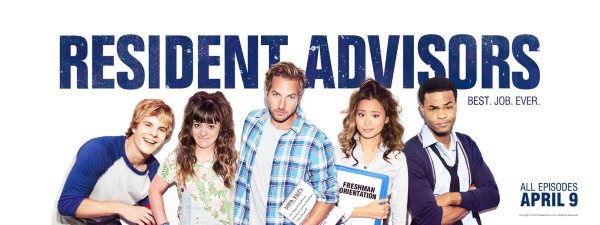
3 Real Takeaways from Hulu’s Fake Peek Into Residence Life [REBLOG]

I was able to get a “sneak peek” at Hulu’s new original series “Resident Advisors” before it came out.  (Check out Klout which gives you freebies and perks according to your level of influence on social media.)  After watching the first episode, here are my initial thoughts:
  1. It’s not that funny.  I struggled to make it past 10 minutes of the first episode.
  2. It really has nothing to do with being a RA and it doesn’t care (not that I think it should).  Residence life is merely the setting. This could be any aspect of college life in the overdone “college movie” genre… swap greek life for residence life… an off campus apartment for a residence hall room… have it take place during spring break… etc.
  3. There *may be the opportunity for some video clips to use in RA training, although the parody is so over the top, it may be minimal.
  4. This series isn’t likely to last past the first season.
In my opinion, that pretty much sums up everything you need to know.
I also wanted to share this blog post from the always-thoughtful and thought provoking Amma Marfo.  Here’s her take:

Amma Marfo (she/her)'s avatarAmma Marfo

“Our lives could be a TV show.”

IMAGE CREDIT: Doug Hyun

I can’t tell you how often I hear that remark from people at the office- and have heard it, regardless of where I’ve worked. Those pleas get answered in the most seemingly random of ways; It would appear that enough current and former RAs have verbalized this need that we received Resident Advisors, which premiered on Hulu this past Thursday.

In the interest of full disclosure, I am still warming to the humor. I’m working hard to give it a chance because, as is often the case, I am a fan of several of the people involved. And additionally, as someone who did have several ridiculous situations happen to her as an RA, its always nice to see how our lives get dramatized. But even as I continue to adjust to how the story is being told, I’ve…


View original post 1,776 more words

The History of the Selfie: And it All Began 1839…

Once a month I re-blog a post that I find interesting and want to highlight.  This post comes from one of the students in Dr. Jerry Kane’s ISYS 6621 course, Social Media for Managers.  It’s a fun look at the selfie phenomenon and what some may consider precursors to it.

Stupid Resume Advice [REBLOG]

 paulgordonbrown: Once a month I re-blog a post that I find interesting and want to highlight.  This post comes from Patrick Love.  It’s a great reminder for the experienced job searcher and a great crash course for the new one.  It has some not-so-standard advice you might hear about your resume. Originally posted on Patrick Love's Life: I... Continue Reading →

Up ↑